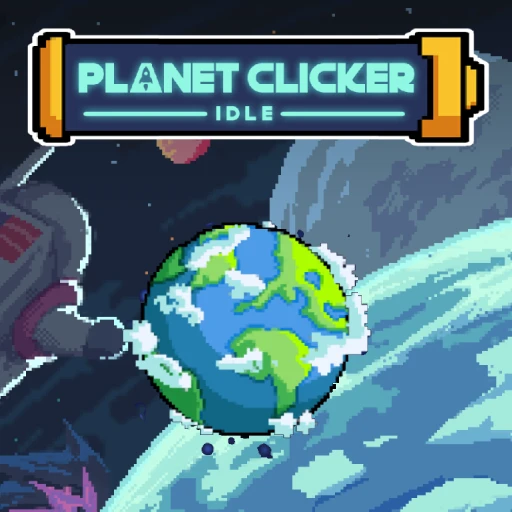
Planet Clicker hands you an entire solar system as an upgrade tree. You start by clicking Earth for single units of energy, spend that energy on farms and power plants, and eventually generate enough to colonize Mars and — a full trillion energy later — Venus, home of the game’s ultimate “Future Technology” tier. It’s the classic incremental loop stretched across three worlds, and that planetary scale is what makes it special: instead of one screen where numbers grow, you get an actual destination to work toward, twice.
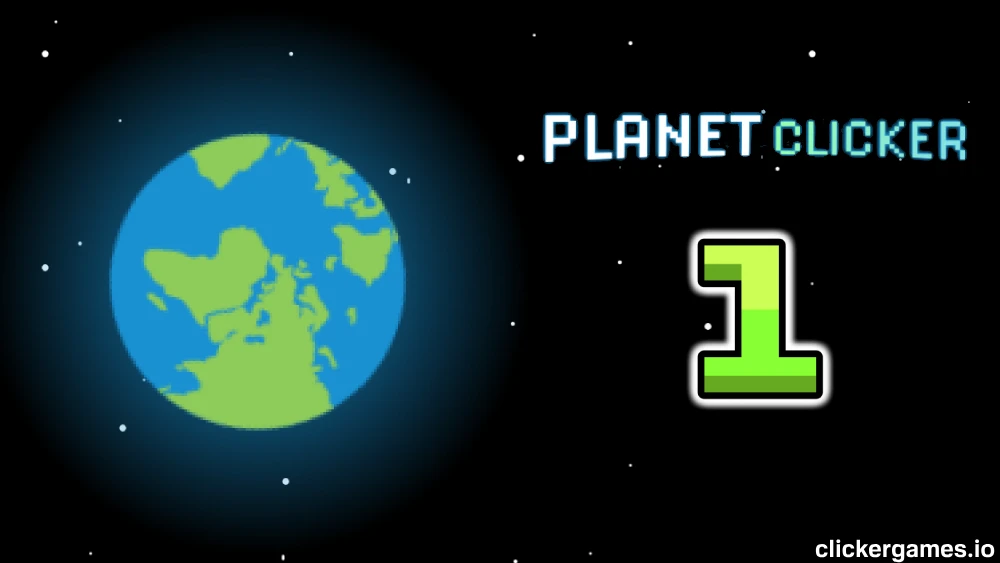
What Is Planet Clicker?
Planet Clicker is a space-themed incremental idle game developed by Coltroc, a developer known for lightweight browser games that run well on any hardware — including school Chromebooks. The mission: generate energy, reinvest it into infrastructure, and expand across the solar system one planet at a time.
The three-planet structure is the game’s identity. Earth is the tutorial economy, where clicks and basic buildings like farms and power plants teach you the rhythm. Mars is the mid-game, with richer resources — solar power, oil, and advanced extraterrestrial technology — that yield far more than anything on Earth. Venus is the endgame, gated behind a massive one-trillion-energy price tag and rewarding you with Future Technology, the most powerful upgrade tier in the game.
Along the way, the gameplay itself transforms. Early sessions are fast-paced manual clicking; by the late game you’re running a deep management sim where automated structures do the earning and your job is deciding where the energy goes. That arc from active to idle is the genre’s core appeal — our explainer on what idle games are covers why it’s so compelling — and Planet Clicker executes it with an actual sense of travel.
How to Play Planet Clicker
Your journey begins on Earth with nothing but a cursor and a planet.
- Click Earth. Each click produces one unit of energy.
- Hit 20 energy and open the shop. Your first upgrades — farms and power plants — start converting your savings into automatic production.
- Build toward Mars. Keep buying production on Earth until you can afford to unlock the red planet, where solar power, oil, and alien technology multiply your income.
- Save for Venus. The final planet costs one trillion energy. Behind that wall sits Future Technology and the game’s biggest multipliers.
- Go passive. Throughout, spend energy on buffs and automated structures so your total keeps climbing even when you’re not clicking at all.
Controls
- Mouse: Left-click the planet to generate energy; left-click to navigate shop menus.
- Touch: On phones and tablets, tap the planet icon. The whole game is playable with one finger.
The 20-energy threshold for your first purchase arrives in seconds, and it’s worth hitting the shop the moment it does. The single biggest difference between a fast start and a slow one in any incremental game is how quickly you convert raw clicks into owned production — every second spent clicking with an upgradeable balance in hand is a second of compounding you gave away.
Planet Clicker Strategy Guide
Planet Clicker’s biggest strategic trap is over-investing in a planet you’re about to outgrow. The planets are effectively prestige tiers — each new world’s baseline production embarrasses the previous one — so the guiding rule is: spend enough to reach the next planet quickly, and not a unit more. Our prestige and ascension guide covers the same “when to move on” logic in depth.
Early Game
Focus entirely on click multipliers first. Doubling your click value early cuts the time to your first automation dramatically, because in the opening minutes your finger is the whole economy. Once clicks are upgraded, buy farms and power plants steadily — every automated unit is income that persists when you stop tapping. Earth’s job is to build a stable passive base, not to be perfected. A good benchmark for leaving the early game behind: when your passive income per second exceeds what you can reasonably produce by clicking, the transition has happened, and your attention should shift from tapping to shopping.
Mid Game
Unlock Mars as soon as you can afford it, even if Earth upgrades still look tempting — the resource yield on Mars is much higher, and energy spent over-upgrading Earth is energy that delays the better economy. On Mars, work through solar power, oil, and extraterrestrial technology, and keep reinvesting into automated structures. This is also where the “tab open” habit starts paying off: leave the game running in the background while you work or study, and your mines keep producing the whole time.
Late Game / Prestige
Venus is a savings problem: one trillion energy. At this scale manual clicking is a rounding error, so the phase is pure economy management — maximize energy per second on Earth and Mars, let idle time accumulate, and resist spending your Venus fund on marginal upgrades. Once Venus unlocks, pour everything into Future Technology. Its multipliers are the strongest in the game and retroactively make your whole system faster. This is the closest thing Planet Clicker has to a prestige payoff, and it’s worth the grind. From there, the run winds down on your terms — push the energy counter as high as you like, or take the completed solar system as your ending and move on to the sequel.
Upgrades & Progression
Progression is organized by planet, and each world is both a location and an upgrade tier:
| Planet | Unlock Cost | Economy |
|---|---|---|
| Earth | Free (start) | Clicks, farms, power plants — the foundation economy |
| Mars | High energy cost | Solar power, oil, advanced extraterrestrial technology |
| Venus | 1 trillion energy | Future Technology — the game’s top multiplier tier |
Within each planet, upgrades split into two families. Click multipliers raise the value of every manual tap and dominate the early game. Automated structures — farms and power plants on Earth, the richer installations on Mars and Venus — generate energy per second and dominate everything after. Buffs layer on top, boosting output further.
The pattern to internalize: each planet’s cheapest production out-earns the previous planet’s most expensive production. That’s why rushing unlocks beats perfecting a world — the next tier resets your sense of what a “big number” is.
It’s also worth understanding what the planet system does psychologically that a single-screen clicker can’t. In most incrementals, the numbers grow but the scenery never changes; Planet Clicker gives you two hard visual milestones — the first view of Mars, the first view of Venus — that mark real phase transitions in your run. Each arrival comes with a new resource menu to learn, which keeps the mid and late game from collapsing into “buy the same building again but bigger.” The trillion-energy Venus wall is steep on purpose: it’s the game’s way of making the final unlock feel like an achievement rather than an inevitability, and the Future Technology payoff on the other side is scaled to match.
Features
- Multi-planet progression across Earth, Mars, and Venus instead of a single static screen
- Full idle mechanics — automated structures earn while you’re away from the keyboard
- Future Technology endgame tier with the game’s biggest energy multipliers
- Auto-save every 30 seconds, stored in your browser
- Runs on PC, Chromebooks, and mobile phones with no download
- Lightweight build that performs well on modest school hardware
- Free to play, and available unblocked on ClickerGames.io
Tips & Tricks
- Click multipliers before buildings. Early on, doubling click value accelerates everything; buildings come into their own once you have savings to spend.
- Never over-upgrade a planet you’re leaving. The moment Mars is affordable, go. Same for Venus. The next planet’s economy is always the better investment.
- Leave the tab open. Idle production runs while the game does — a study session or workday with the tab in the background can fund your next unlock.
- Buy automation relentlessly. Every power plant is income that doesn’t need your finger. The endgame belongs to players whose economy runs itself.
- Protect your Venus fund. At the trillion-energy stage, small purchases are leaks. Bank everything until the unlock.
- Future Technology first once you land. On Venus, its multipliers outclass everything else — buy in as deep as you can immediately.
- Check back every 30 seconds early on. The auto-save cadence means quitting right after a big purchase is always safe; just give it a moment.
- Play on the device you’ll return to. Progress lives in your browser’s storage, so sticking to one device and browser keeps your empire in one place.
Games Like Planet Clicker
- Planet Clicker 2 — the sequel, with more planets and a bigger upgrade catalog; the natural next step once Venus is conquered.
- Planet Clicker 3 — the series’ latest entry for players who want the newest version of the formula.
- Energy Clicker — keeps the energy-generation theme without the interplanetary travel.
- Cookie Clicker — the genre’s founding legend; same compounding economy, baked goods instead of planets.
FAQ
Who created Planet Clicker?
Planet Clicker was developed by Coltroc, a developer known for addictive, lightweight browser games that run smoothly on virtually any hardware.
Does Planet Clicker save my progress?
Yes. The game auto-saves every 30 seconds, and your progress is stored in your browser on the device you play on. Return in the same browser and you’ll pick up where you left off.
How do I unlock Venus?
Venus costs one trillion energy units. Build maximum passive production on Earth and Mars, avoid unnecessary spending, and let idle time accumulate the balance.
What is the most powerful planet?
Venus. It’s the hardest to unlock, but it grants access to the Future Technology tier, which offers the highest energy multipliers in the game.
Can I play Planet Clicker on mobile?
Yes — it runs in any mobile browser with tap controls, and official apps are available on Google Play and the Apple App Store if you want a dedicated version.
Can I play Planet Clicker unblocked at school?
Yes. The version on clickergames.io is fully unblocked and safe, so it works on school and work networks where game sites are usually filtered. More like it live in our hot clicker games collection.